
Total Cost of Ownership: More than Just the Forklift Purchase Price
When evaluating a forklift for your operation, the purchase price is only one piece of the puzzle.
Published: August 26, 2026
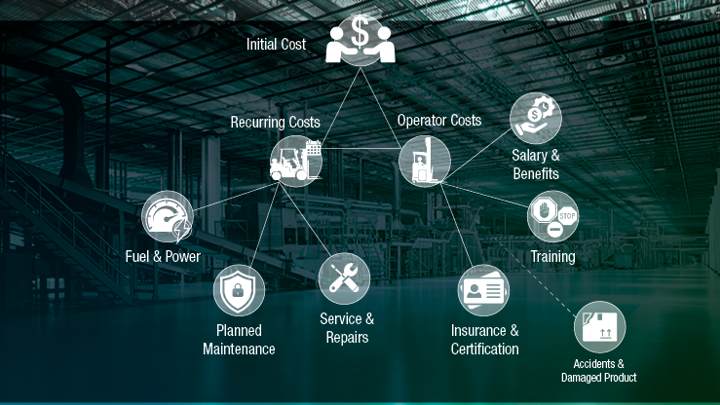
When evaluating a forklift for your operation, the purchase price is only one piece of the puzzle. The true expense of owning a forklift is measured by its Total Cost of Ownership (TCO), which includes acquisition costs, maintenance, energy consumption, downtime, operator productivity, and resale value.
Understanding forklift TCO can help businesses make smarter fleet investments, reduce operating costs, and maximize long-term productivity.
What Is Total Cost of Ownership (TCO) for a Forklift?
Total Cost of Ownership (TCO) is the complete cost of purchasing, operating, maintaining, and eventually replacing a forklift over its lifespan.
A forklift's TCO typically includes:
- Initial purchase or lease cost
- Fuel or electricity expenses
- Preventive maintenance and repairs
- Replacement parts
- Operator training
- Equipment downtime
- Fleet productivity impacts
- Resale or trade-in value
While a lower-priced forklift may seem like the best deal upfront, a machine with higher reliability and lower operating costs often delivers greater savings over time.
Why Is Total Cost of Ownership Important?
Many businesses focus on acquisition costs when purchasing material handling equipment. However, ongoing operating expenses often exceed the original purchase price throughout a forklift's life.
By evaluating TCO, fleet managers can:
- Reduce long-term operating expenses
- Improve equipment reliability
- Increase warehouse productivity
- Minimize unplanned downtime
- Make data-driven fleet decisions
A lower TCO means more value from every hour your forklift operates.
- Reliable Forklift Performance Reduces Costly Downtime
Forklift downtime can significantly impact productivity and profitability. When equipment is unavailable, operations slow down, deliveries may be delayed, and labor costs continue to accumulate.
Reliable forklifts help minimize these disruptions through:
-
- Durable components
-
- Proven engineering
-
- Simplified maintenance requirements
-
- Extended service intervals
- Benefits of Reliable Forklifts
✅ Fewer breakdowns
✅ Lower repair costs
✅ Higher fleet uptime
✅ Increased productivity
Simply put, reliable equipment helps keep your operation moving while reducing unexpected expenses.
- Lower Operating Costs Deliver Long-Term Savings
The least expensive forklift isn't always the most economical choice. A forklift's operating costs can have a major impact on overall ownership expenses.
When comparing equipment, consider:
Fuel and Energy Consumption
Electric forklifts may offer lower energy costs and reduced emissions, while internal combustion models may better suit certain outdoor applications.
Maintenance Requirements
Forklifts designed with fewer wear components and longer service intervals can reduce maintenance labor and repair costs.
Parts Replacement Frequency
Equipment built with quality components often requires fewer replacement parts over its lifecycle.
Focusing on these factors can significantly lower your forklift total cost of ownership.
- Easy-to-Operate Forklifts Improve Efficiency
Operator efficiency plays an important role in forklift TCO. Equipment that is comfortable, intuitive, and easy to maintain helps both operators and service technicians perform their jobs more effectively.
Features that contribute to lower operating costs include:
-
- Ergonomic operator compartments
-
- Intuitive controls
-
- Improved visibility
-
- Easy-access service points
-
- Simplified maintenance procedures
- How Ease of Use Affects TCO
-
- Faster operator training
-
- Reduced operator fatigue
-
- Fewer handling mistakes
-
- Shorter maintenance times
-
- Improved workplace productivity
-
- Small gains in efficiency can add up to substantial cost savings over the life of a forklift.
- Strong Forklift Service and Support Minimize Downtime
Even the most dependable forklifts require service and maintenance. Having access to responsive support can make a significant difference in controlling costs and keeping operations running smoothly.
Look for a forklift provider that offers:
- Genuine OEM parts
- Experienced service technicians
- Preventive maintenance programs
- Fast response times
- Strong dealer network support
Effective service support helps reduce downtime and ensures your fleet continues operating at peak performance.
How to Lower Your Forklift Total Cost of Ownership
To reduce forklift ownership costs, focus on:
- Choosing reliable equipment
- Following preventive maintenance schedules
- Training operators properly
- Monitoring fleet utilization
- Reducing unnecessary idle time
- Partnering with a trusted dealer
- Evaluating long-term operating expenses, not just purchase price
These strategies can help improve productivity while maximizing return on investment.
The Bottom Line: Think Beyond the Sticker Price
A forklift's purchase price tells only part of the story. The real measure of value is its Total Cost of Ownership.
Reliable performance, lower operating costs, ease of maintenance, and strong service support all contribute to a more productive and cost-effective fleet.
By evaluating the complete lifecycle cost of your material handling equipment, you can make informed decisions that support your operation today and position your business for long-term success.
At UniCarriers Forklift, we believe in delivering more than just equipment. We provide dependable solutions designed to help businesses improve productivity, minimize downtime, and lower total ownership costs.
Learn more about UniCarriers Forklift and explore our full product lineup: https://www.unicarriers.com/en
Frequently Asked Questions
Total cost of ownership (TCO) is the total expense of owning and operating a forklift, including purchase price, maintenance, energy costs, repairs, downtime, and resale value.
Purchase price is a one-time expense, while operating and maintenance costs continue throughout the forklift's lifecycle. A higher-quality forklift often delivers lower total costs over time.
Key factors include fuel or electricity consumption, maintenance expenses, replacement parts, downtime, operator productivity, and equipment lifespan.
You can reduce TCO by selecting reliable equipment, following preventive maintenance schedules, investing in operator training, and partnering with a strong service provider.